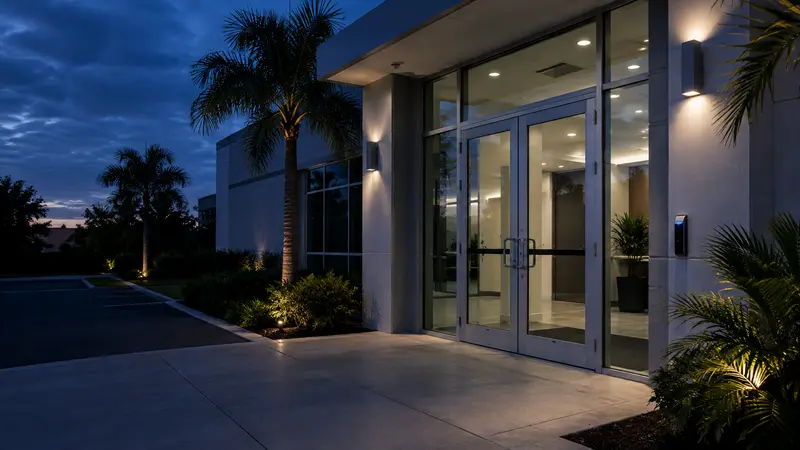
A typical door schedule
Every building is different, but the same doors come up again and again. Here is what we usually find, and what tends to fix it.
| Door | Common problem | Usual fix |
|---|---|---|
| Storefront entrance | Worn pivots and a closer that slams or will not latch | New closer or pivots, adjusted latch, keyed cylinder |
| Rear exit | Propped open, or chained shut against code | Exit device with an alarm, and a door position switch |
| Office suite | Too many keys out, no idea who has them | Master key system or a card reader |
| IT or records room | Same key as the rest of the building | High-security cylinder or its own reader |
| Restrooms and storage | Loose levers, locks that stick | Grade 1 or 2 commercial levers keyed into the system |
Start with who needs to get in
The right answer is rarely "the most expensive lock". It starts with a list: who needs access to which doors, at what times, and how often people come and go. A ten-person office with low turnover may be perfectly served by a well-planned master key system. A clinic with shift staff and a records room usually earns its keep with access control.
We walk the building, write up a door-by-door plan, and price it in stages so you can do the important doors first.
The work described here is done by Key-En-Lock's commercial locksmiths in Melbourne, serving businesses across Brevard County.